
This week the Textile Studio moved to recycled plastic. I printed natural-fibre fabric swatches in recycled PET on the A2L, each drawn as one continuous line, then checked my settings against how PET behaves.
Nozzle 265 °C. PET melts around 250–260, so I run just above it. No clogs so far.
Bed 80 °C. Right where PET starts to soften (67–81), so the first layer stays tacky and grips.
Fan 80% from layer 4, never below 60%. PET stays soft for a long time. The fan sets each loop before the next one lands on it.
Speed 13 mm/s, about 1.8 mm³/s through a 0.4 nozzle. Slow, but the strand melts all the way through.
Drying 65 °C for 4–6 hours, before every print. PET takes in water, and wet PET bubbles and breaks down in the nozzle. 65 stays just under softening, so the spool doesn't stick to itself.
The pattern is simple: run hot so the melt flows, then cool hard to hold the shape.
Next: a full swatch set in rPET.
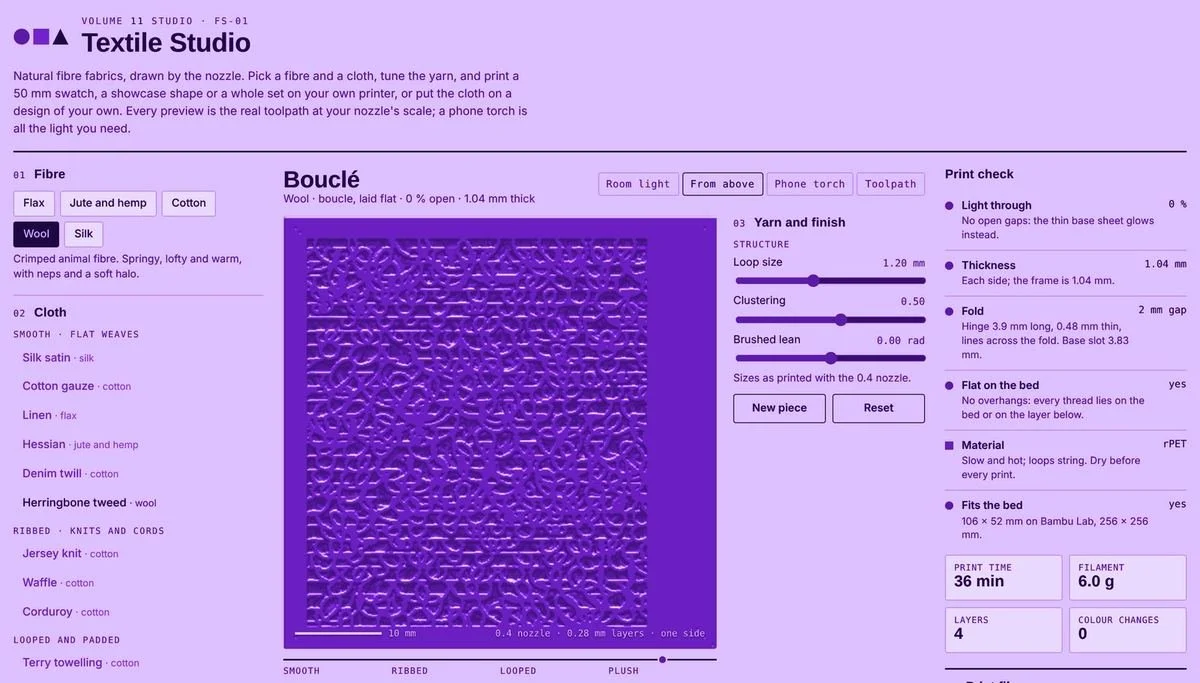
The Textile Studio, set to bouclé in rPET.
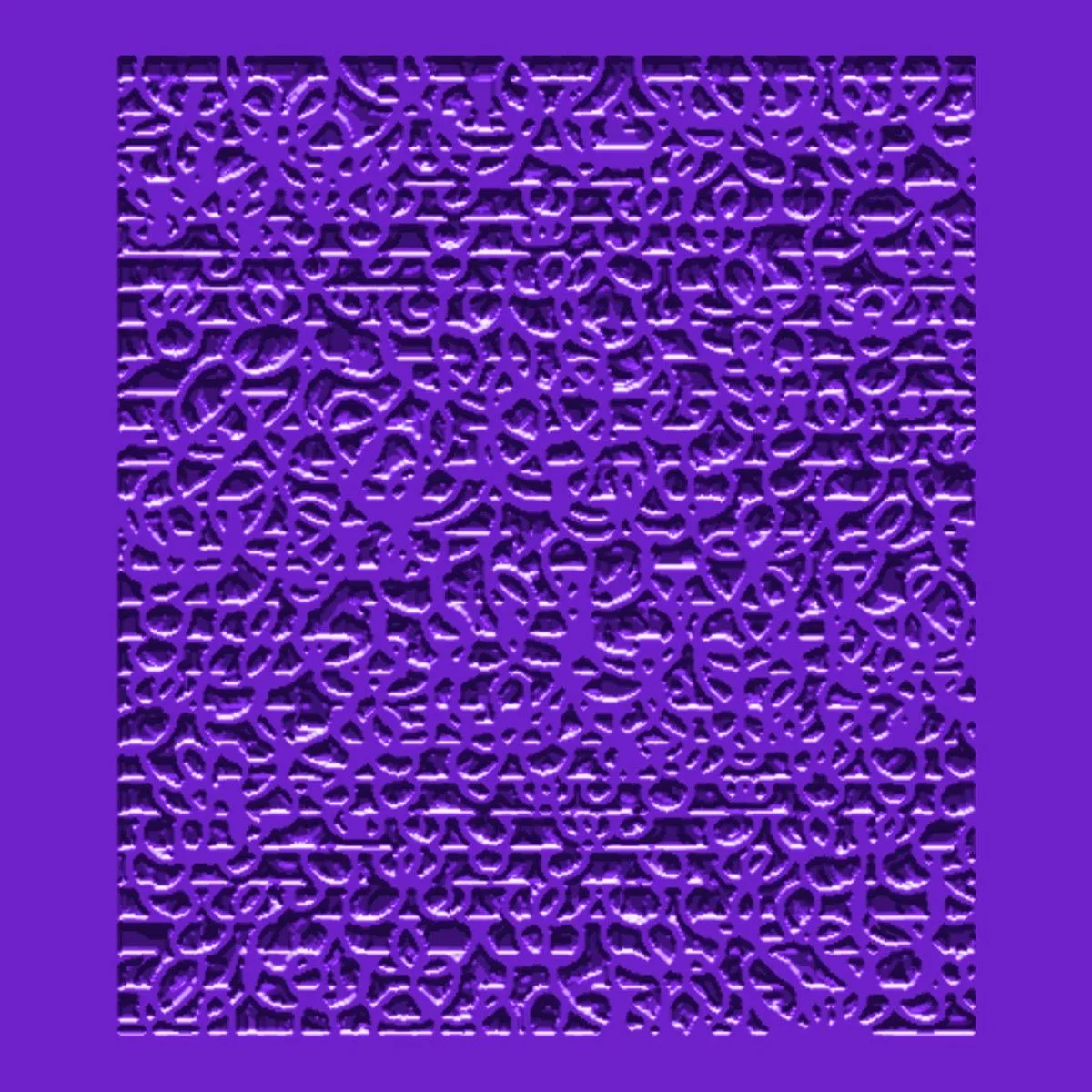
Bouclé, simulated from the toolpath.
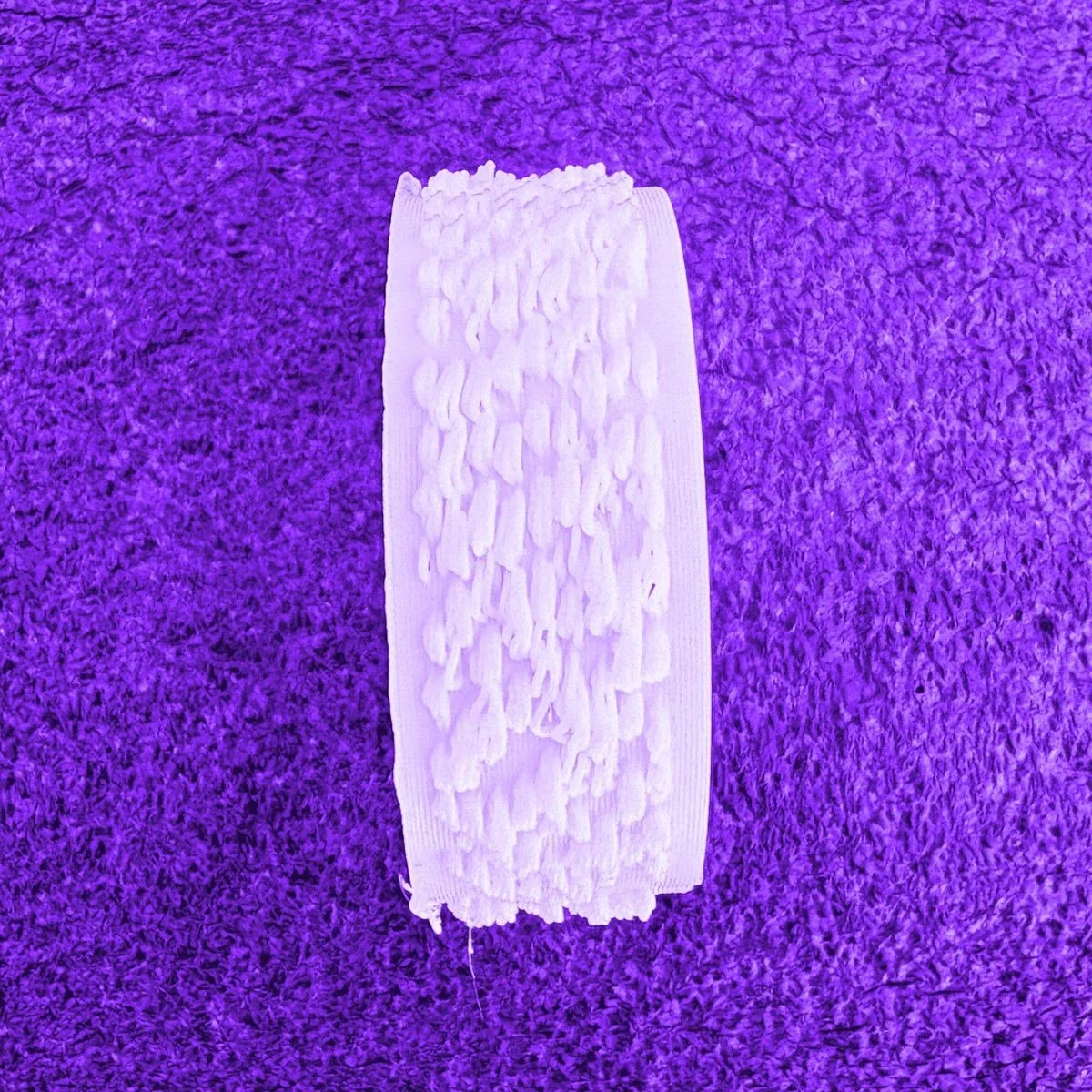
Printed terry loops on a cylinder.
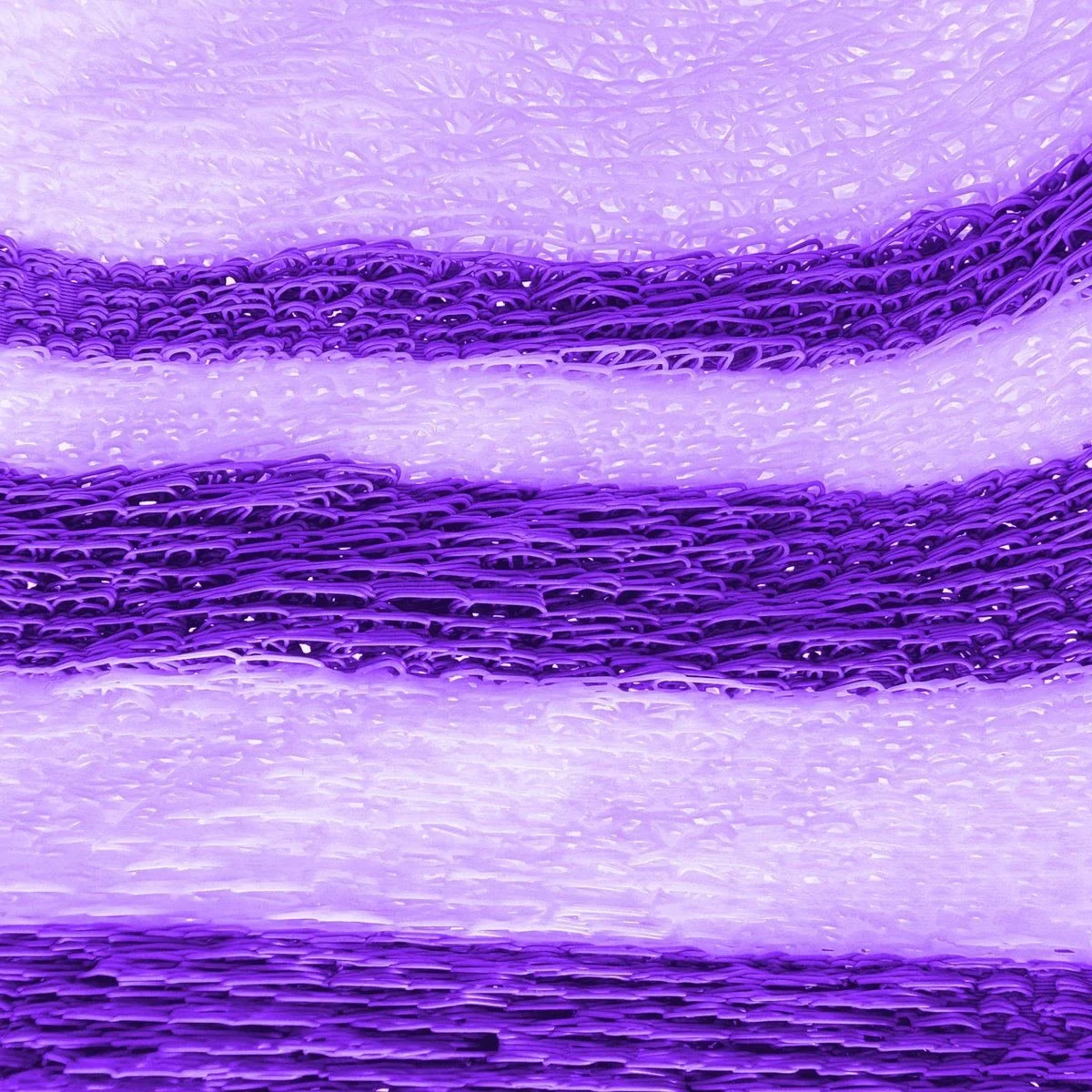
Close-up: loop bands, one continuous line.